
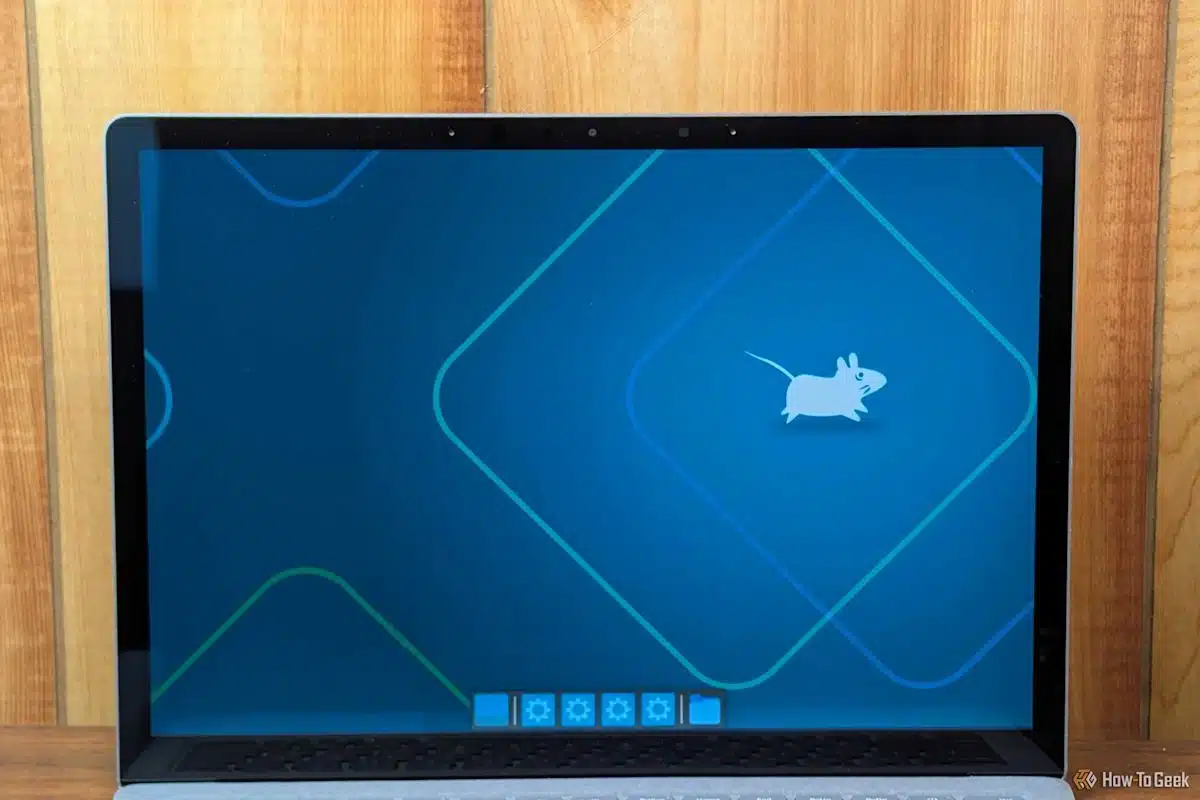
Building your own Linux distribution fork can turn a freshly installed operating system into one that’s ready to use exactly as you prefer. It offers greater control and a leaner setup—but also makes you responsible for more of the work normally handled by a distribution’s developers.
Linux users often follow the same routine after installing a distro: add repositories and packages, change default settings, and adjust the system to work well with their hardware. A custom fork lets you define those choices in advance, so they’re part of the installation rather than a series of manual tweaks.
Modern tools can make this process more accessible. Some let you describe a system in scripts and rebuild it automatically as the underlying distribution changes. The result can be a repeatable baseline for different devices, such as a laptop, workstation, and home server.
A fork can also include choices that an upstream project might not support, such as a patched driver for uncommon hardware, a preferred desktop theme, workflow-specific scripts, or a kernel tuned for a particular machine. Building a distro can also be an educational exercise: it gives you a closer look at how booting, package management, and other core components fit together.
General-purpose distributions include software and services intended to support a wide range of users. That can mean packages for hardware, languages, or features you never use.
With a fork, you can start with a minimal base and add only what you need. A smaller system may be faster and easier to troubleshoot. It can also reduce security exposure: every installed package is potential code to maintain, and every running service can create another point of entry. A curated set of components is simpler to review and understand.
The main cost is responsibility. Established distributions have teams that monitor vulnerabilities, prepare security fixes, and test upgrades. When you fork, how much of that work you inherit depends on how closely you stick to the original system.
A thin customization layer on top of a well-maintained base may preserve much of its security support. But packages you patch yourself or versions you hold back can fall outside the original developers’ guarantees. If a vulnerability affects your custom kernel or a specialized library, you may have to fix it yourself.
Upstream changes can also break your assumptions. Configurations, defaults, and even system components may change, leaving you to diagnose failed builds or systems that no longer boot.
A Linux fork can provide a tailored, consistent, and less cluttered system. But the added control comes with a maintenance and security burden. It’s a good fit for people prepared to keep their custom distro updated and working—not necessarily for everyone.
ChicagoVPS is your gateway to unparalleled hosting solutions. Our state-of-the-art datacenters and powerful network ensures lightning-fast speeds and uninterrupted connectivity for your websites and applications. Whether you’re a startup looking for scalable resources or an enterprise in need of enterprise-grade hosting, our range of plans and customizable solutions guarantee a perfect fit. Trust in ChicagoVPS to deliver excellence, combining unmatched reliability and top-tier support.
For Inquiries or to receive a personalized quote, please reach out to us through our contact form here or email us at sales@chicagovps.net.


